
The Blockade of the Strait of Hormuz Could Trigger Something Far More Serious Than Just a Rise in Global Oil Prices
6 min read
Thanks to President Donald Trump's useless post on his Truth Social account, in which he claimed that it was his power that made Iran submit and accept their defeat, Iran closed the Strait of Hormuz again on April 18, 2026, less than 24 hours after it had reopened on April 17.
It was Trump's provocation that ignited Iran's anger, especially after Iran had already agreed to the terms they negotiated with Trump. They were willing to lift the blockade on the Strait of Hormuz under the conditions in which the U.S. Navy has to stop the double blockade on the strait and withdraw from the area. Trump still did not lift the double blockade he had imposed.
As a result of the prolonged conflict between the U.S. and Iran in the Strait of Hormuz, the price of global crude oil reserves in the Atlantic region, Brent, has risen. From the end of February through March alone, crude oil prices that were initially $72 per barrel have now reached $120 per barrel. In the U.S. itself, as of April 22-23, gas prices rose from $3 per gallon to $4 per gallon. Some regions in the U.S., such as the West Coast (California, Oregon, and Washington), have even seen prices climb to $5 per gallon.
Besides the U.S., countries affected by the war between the U.S. and Iran in the Strait of Hormuz include China, South Korea, Japan, India, several European nations, and almost all Middle Eastern countries such as Saudi Arabia, Iraq, the UAE, Kuwait, and Iran itself. Middle Eastern countries rely on 70% to 90% of their revenue from oil exports, with proceeds from oil sales being used for infrastructure development, fuel and food subsidies, and national budget reserves. Five of the Middle Eastern countries mentioned earlier depend on the Strait of Hormuz for the sea-based export of their oil. If the Strait of Hormuz remains disrupted for this long, they will not be able to sell their oil easily, national revenue will drop drastically, and fiscal pressure will mount. Oil-importing countries that rely on Middle Eastern nations passing through the Strait of Hormuz will naturally also suffer from the negative impacts of this event, with Japan and South Korea being prime examples.
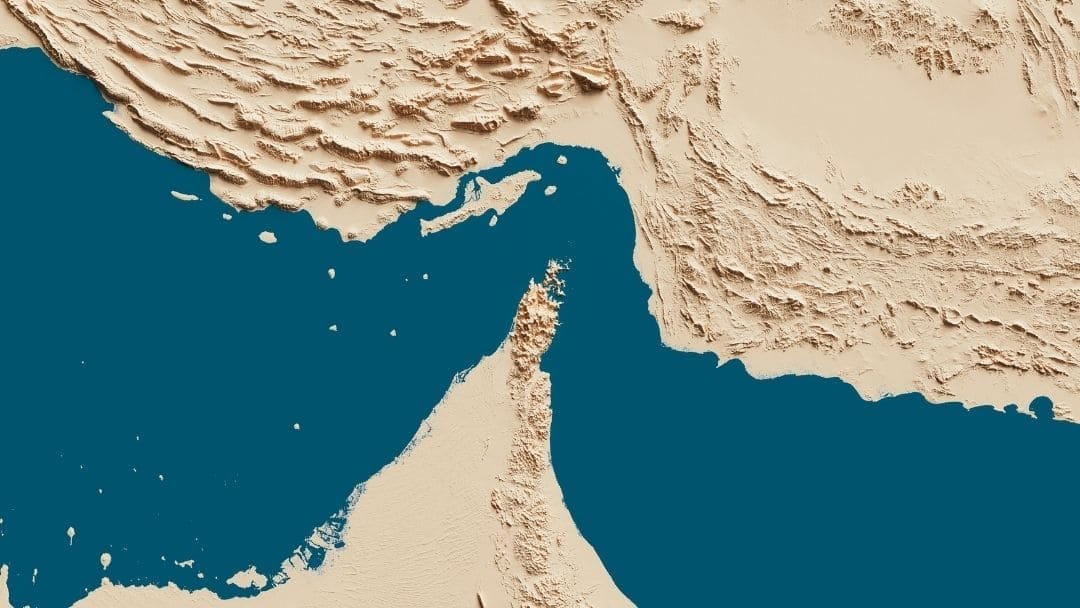
Japan and South Korea are unable to produce their own natural energy resources. To make matters worse, Japan depends on Middle Eastern countries that pass through the Strait of Hormuz for 75-80% of its crude oil reserves, and South Korea similarly depends on those same countries for 55-60% of its crude oil supply.
So, what exactly is the oil coming through the Strait of Hormuz typically used for? For Japan, oil serves as fuel for cars, motorcycles, trucks (logistics and delivery), airplanes, and ships. Japan is a country that is heavily reliant on imports, with almost all goods transported by ship and truck. If the distribution of oil passing through the Strait of Hormuz is disrupted, fuel prices will inevitably spike, import costs will rise, and the prices of everyday necessities will become more expensive.
For South Korea, the oil coming through the Strait of Hormuz is used as fuel for transportation vehicles, as a source of power generation, and most importantly, as the lifeblood of its petrochemical industry. The range of products South Korea is able to produce from petrochemicals includes plastics, synthetic fibers for clothing materials, industrial chemicals, and battery component materials. Most of these products are exported by South Korea to countries such as China, the U.S., Vietnam, and Europe. As if being cursed, South Korea is one of the world's largest exporters of petrochemical-derived goods, and the country's revenue is heavily dependent on this industry. That is why disruption in the Strait of Hormuz does not only harm Korea, but also has wide-reaching consequences for the global economy.
An energy crisis has previously occurred in European countries in prior years as a result of the Russia-Ukraine war, which to this day remains unresolved. After President Vladimir Putin ordered a full-scale invasion of Ukraine on February 24, 2022, European Union countries imposed sweeping sanctions on Russia, including freezing the assets of Russia's Central Bank, restricting exports of Russian technology, and banning the sale of aircraft and spare parts to Russian airlines. In response to the treatment by EU countries over this matter, President Putin quietly ordered the cut-off of their natural gas supply to European nations. As a result, gas prices soared, electricity bills skyrocketed, and inflation surged sharply across Europe.
Things were even worse for Germany, as they relied on Russia for roughly 50% of their natural gas supply. This natural gas was used extensively by Germany to power home heating boilers, electricity generation, and the production of glass, steel, cement, and chemicals. Like a snowball effect, Germany ultimately officially declared itself to be in a recession in the first quarter of 2023. Even after passing through that recession, Germany's economic condition has still not recovered to this day.
What happened to Germany could very well happen in the near future to countries that rely on the Strait of Hormuz as their trade route, if Iran and the U.S. continue to fight over blocking the strait. Therefore, before it's too late, strengthen your financial foundation. So that when the unwanted things happen, you and the people closest and dearest to you can get through it all with greater peace of mind.
Latest articles

Company
Resources
Contact