
Why the Risk of a Recession is Growing in 2026
5 min read
In today’s world, many of us would agree that even just paying our bills has become really hard. Let alone rewarding ourselves, setting aside money for savings has also become almost impossible. But did you know that most of the time, before a country enters an economic downturn, there are specific indicators that appear beforehand? Here are several warning signs that suggest we might face a recession or broader economic downturn in 2026:
Mass Layoffs

Mass layoffs are one of the key factors contributing to the possibility of a recession in 2026. Companies across various industries, including technology, finance, automotive, and retail, are cutting thousands of jobs due to economic uncertainty, shifting market demands, and cost-cutting measures. In the U.S. alone, 1.2 million Americans across various industries were laid off in 2025, 58% more than in 2024, marking the highest rate since 2020.
As a result of these widespread job losses, many individuals are facing job insecurity or unemployment, leading to reduced consumer spending. This decline in purchasing power creates a ripple effect, forcing businesses to downsize further and weakening the overall economy. Given these ongoing challenges, businesses and individuals must adapt to these changes and prepare to navigate potential recessions.
The De-Dollarization Moves

Sick of the U.S. dollar hegemony and Trump's arbitrary acts toward global trade tariffs, BRICS, which stands for Brazil, Russia, India, China, and South Africa, has already been trying to move away from the USD since 2022, when the U.S. imposed severe, sweeping sanctions against Russia following the invasion of Ukraine in the same year. This action, which is known as de-dollarization, will likely have negative impacts on countries not affiliated with BRICS, especially the United States.
Why might a major recession happen in 2026? If BRICS and other countries begin using alternative currencies for trade, the demand for the U.S. dollar would decrease. This would weaken the global influence of the dollar, potentially causing its value to drop. A weaker dollar would make imports more expensive, leading to higher inflation in the U.S.
What will happen to other countries not part of BRICS and its 13 partner countries? Since many countries and companies hold debt in U.S. dollars, a sudden shift away from the dollar could create instability in the international markets. Countries with large U.S. dollar reserves would face significant financial pressure, which could slow down global economic growth.
The Escalation of Geopolitical Tensions Between Countries
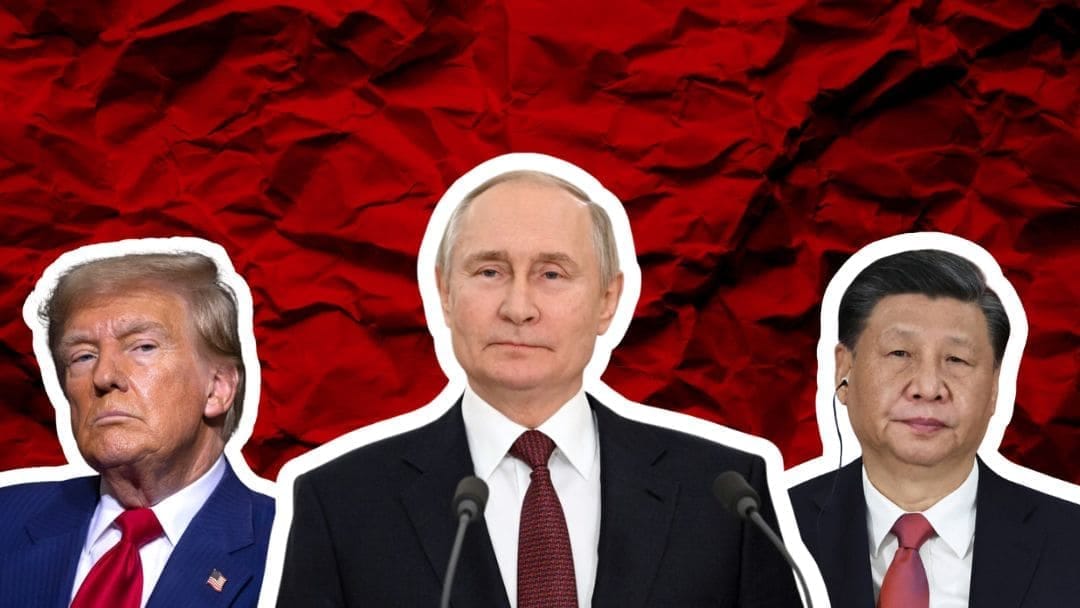
An attack by United States forces under the orders of President Donald Trump on the capital of Venezuela, Caracas, on January 3, 2026, and the arrest of Venezuelan President Nicolás Maduro and his wife could be the stimulus for World War III, which could potentially trigger a Great Recession or even a Great Depression similar to what occurred in 1929. Trump claimed that the arrest was justified because Maduro was allegedly involved in drug trafficking, corruption, and ‘narco-terrorism,’ and that U.S. courts had issued indictments against him.
Trump also spoke openly about Venezuela’s oil in a way that suggested he viewed it as something that should be controlled or utilized by the United States. Trump announced that 30 million to 50 million barrels of Venezuelan oil would be shipped to U.S. ports and sold at market prices, with the revenue to be ‘controlled’ by him for the benefit of the Venezuelan people and the U.S. government.
Trump’s actions were, of course, condemned by many countries as an awful and serious violation by one state interfering with the sovereignty of another. One of the countries that condemned the U.S. actions was China. China showed its support for Venezuela by urging that an emergency meeting of the UN Security Council be scheduled, calling for Maduro's release through peaceful negotiations and dialogue.
Despite China having close strategic ties with Venezuela, it appears reluctant to secure Maduro’s release through the use of its military power. China’s preference to avoid open military escalation was also evident when Iran was attacked with ballistic missiles by Israel on June 13, 2025. Even after the death of Iran’s supreme leader, Ali Hosseini Khamenei, during a joint U.S.-Israel attack on Iran on February 28, 2026, China only urged the U.S. to immediately halt its military action against Iran.
Although both China and Russia maintain good relations with Venezuela and Iran, it seems that neither will launch any attack unless their own country is attacked. That is why the possibility of a third world war that could devastate the global economy depends on how China and Russia act, as their militaries are ranked second and third strongest in the world after the United States.
But the latest U.S.-Israel attack on Iran impacted the country so much that it threatened to essentially block the Strait of Hormuz, while China is the largest single importer of oil that passes through the Strait of Hormuz. That means China might take serious action toward the U.S. if Iran really does close the Strait of Hormuz. The U.S. right now is not the same as the U.S. back then. The U.S. debt is already piling up, and prolonging the war would massively increase U.S. government spending, ballooning the national debt. Some foreign investors might also pull back from U.S. assets.
Latest articles

Company
Resources
Contact